The kelvin scale measures the colour of white light, and a bulb's figure is the number with a K after it. Household bulbs run from about 1800K, a deep amber glow, through 2700K and 3000K, both warm white, and 4000K, a neutral white, to 6500K, a cool daylight white. The lower the number, the warmer the light looks.
Kelvin is colour and nothing else. Brightness is a separate number, covered in what lumens are and how many you need, and shape and cap are a third question in the different types of light bulb. This page stays on the scale itself. Which figure to choose for each room is in warm white or cool white, room by room.
Colour temperature chart for light bulbs, 1800K to 6500K
| Kelvin | Name on the box | What it looks like | Where it suits |
|---|---|---|---|
| 1800K to 2200K | Extra warm white | Very golden, amber | Decorative filament bulbs on show, where a candle-like glow is the point |
| 2700K | Warm white | Warm, slightly golden | Living rooms, dining rooms, bedrooms, hallways and table lamps. Our default |
| 3000K | Warm white | Warm, a little crisper | Kitchen worktops, reading corners, bathroom ceilings, outside |
| 4000K | Natural white or cool white | Neutral white | Bathroom mirrors, utility rooms, garages, a desk used by day |
| 5000K to 6500K | Daylight, or cool white | Cooler, leaning blue | Workshops and specialist tasks. We would not choose it for a room you relax in |
The names in the second column are not standardised, so read the first column before the second. A figure between two rows sits between them: 3500K is a step cooler than 3000K and a step warmer than 4000K. The last column is where we would start, not a rule, and a bedroom has its own guide, the best colour temperature for a bedroom.
What does kelvin mean on a light bulb?
It means the colour of the light, written as a temperature. The kelvin, symbol K, is the SI unit of temperature, on a scale that starts at absolute zero, minus 273.15°C. Lighting borrows it to describe white light. The CIE, the international body for lighting standards, defines colour temperature as the temperature of an ideal heated object, a Planckian radiator, whose glow is the same colour as the light in question.
So the figure is a comparison, not a reading. A 2700K bulb is not at 2700 kelvin, which would be about 2,427°C. It gives light the colour of something that hot. For an LED the figure is strictly a correlated colour temperature, or CCT: the nearest match on the scale, which is why two bulbs with one figure can differ.
Why do lower kelvin numbers look warmer?
Because the scale follows a heated object, and 'warm' and 'cool' describe how the light looks, not the temperature behind it. The US Department of Energy's fact sheet on LED colour puts it in one line: as the object gets hotter, 'it turns red, orange, yellow, white, and finally blue'. Red and amber are the low temperatures and blue-white the high ones. It is the one scale in the house where the blue end is the hot one, which is the opposite of every tap you own.
Two reference points make sense of the rest. The CIE's standard for typical tungsten-filament lighting is a radiator at about 2856K, so warm white at 2700K and 3000K sits one either side of the old filament bulb. Its standard for average daylight is about 6500K, the figure at the top of the chart.
What do warm white, cool white and daylight mean in kelvin?
Warm white means 2700K or 3000K, cool white means 4000K on some bulbs and 6000K on others, and daylight means 5000K to 6500K. Those are the bands in our warm white and cool white guide, and they are a convention, not a standard. Six of our bulbs show it, each figure read from its listing.
| Kelvin | Bulb and price | Name in its title | Lumens |
|---|---|---|---|
| 1800K | Vintage Globe E27 LED 5W, £12.95 | Extra Warm White | 280 |
| 2200K | Vintage E27 LED 6.5W, £13.70 | Extra Warm White | 630 |
| 2700K | Candle E14 LED 4W, £5.41 | None, the figure alone | 470 |
| 3000K | LED GLS E27 12W, £14.95 | Warm White | 1,521 |
| 4000K | Golf Ball E14 LED 4W, £8.69 | Natural White | 470 |
| 6000K | Golf Ball E14 LED 4W, £8.69 | Cool White | 470 |
Prices checked 25th November 2026. Since 4000K is also sold as cool white, the same two words can sit on bulbs 2000K apart. Buy on the number, not the adjective. The whole range is in light bulbs, and the amber end is in vintage light bulbs.
Where is the kelvin figure on a bulb?
On the box, on the bulb and on the listing. In Great Britain the ecodesign regulations for lighting require a bulb's packaging to show its colour temperature, rounded to the nearest 100K and given in words or as a graphic as well, and the bulb itself to carry the figure where there is room for it. On our product pages it is in the details table as LED Colour Temperature.
Is a higher kelvin bulb brighter?
No. Kelvin is the colour of the light and lumens are the amount of it. In the table above, the 2700K candle, the 4000K golf ball and the 6000K golf ball each give 470 lumens from 4 watts, and the brightest bulb of the six is a 3000K warm white. Colour can change how bright a room feels to you, but it is not a brightness scale, and it does not tell you the running cost either: all three of those bulbs draw the same 4 watts.
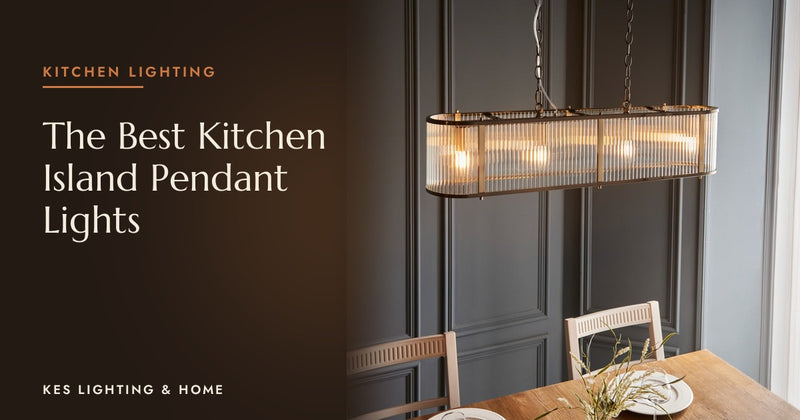
A review of the four-light Endon Ridgeton pendant, from Lisa L., makes the point: she 'went for colour Amber thinking they would just give a warm glow but they are actually very bright'. Amber is colour. Lumens are brightness, and a bulb can be amber and bright at once. The single Endon Ridgeton pendant in antique brass (£48.95, checked 25th November 2026), the fitting pictured at the top of this guide, takes one E27 bulb, not included, behind clear ribbed glass, so the bulb you choose is on show and both numbers matter.
Which kelvin is closest to an old filament bulb?
2700K or 3000K, because the old bulb sat between them. The CIE's tungsten figure of about 2856K is 156K above one and 144K below the other. We would start at 2700K: it errs on the golden side, and that is the side a sitting room forgives. That is our preference, not a measurement. The Candle E14 LED Bulb 4W 2700K states the figure in its title and gives 470 lumens; it is not dimmable. For the wattage to buy, see what LED wattage replaces your old bulb. For a deeper amber, the 1800K to 2200K band, our guide to vintage light bulbs compares ours by brightness.
What is a CCT-switchable light?
A fitting with the LED built in that gives a choice of fixed colour temperatures instead of one. CCT is the correlated colour temperature from earlier, so 'CCT switchable' or 'colour switchable' means one fitting can give more than one kelvin figure. The words do not tell you which figures. Three of ours make the point.
- The Collingwood H2 Pro Extreme CSP outdoor soffit downlight in white (£45.98, checked 25th November 2026) switches between 2200K, 2700K and 3000K. Every setting is warm.
- The Astro Mallon LED bathroom ceiling light in bronze (£178.02, checked 25th November 2026) switches between 2700K, 3000K and 4000K, with a CRI of 90 and between 670 and 733 lumens depending on the setting.
- The Collingwood Thea Lite CSP 100mm downlight (£29.95, checked 25th November 2026) switches between 3000K, 4000K and 6000K. There is no 2700K on it.
If you wanted 2700K, only two of those three can give it to you. Where a fitting has the LED built in, we would choose the switchable version whenever there is one, because there is no bulb to change later if the colour is wrong. How the setting is changed differs from fitting to fitting, and the Mallon shows that the output can change with it, so read the listing before you order. The rest are in downlights.


A tuneable white smart bulb does a similar job in a fitting you already own. Our Candle E14 LED Smart Light Bulb (£36.89, checked 25th November 2026) tunes from 2700K to 6500K from an app and gives 350 lumens. An ordinary dimmable LED gets less bright and does not set out to change colour; our guide to dimming LEDs covers that side.
Why can two 2700K bulbs look different?
Because 2700K is a rounded label for one measure of colour, and there is more to a light than that. Four things separate two bulbs with the same figure on the box.
- Rounding. The packaging figure is rounded to the nearest 100K, so it is an approximation by design.
- Tolerance. The same regulations allow LED bulbs a set tolerance in colour, defined as a six-step MacAdam ellipse.
- Tint. Kelvin places a light on one line, from amber to blue. The Department of Energy's fact sheet notes that two sources with the same figure can sit either side of that line, one looking slightly green and the other slightly pink. That is 'nearest match' at work.
- Colour rendering. CRI, the colour rendering index, is a score of up to 100 for how truthfully a light shows the colours of the things it lands on. Same kelvin, different CRI, and the same red sofa is two different reds. The regulations set a floor of CRI 80, with exceptions such as bulbs meant for outdoor use, and our guide to CRI says where 90 is worth paying for.
What we would do about it: buy the bulbs for one fitting together, from one range, and keep to one figure for the lights you see together. When one bulb fails in a five-arm fitting and the range has moved on, replace the five. It costs a few bulbs and saves you looking at the odd one out every evening.
The short version
- Kelvin, written K, is the colour of white light. Lower numbers look warmer and higher numbers cooler. Household bulbs run from about 1800K to 6500K.
- 1800K to 2200K is amber. 2700K and 3000K are warm white. 4000K is neutral white. 5000K to 6500K is the daylight band.
- The names are not standardised: cool white is 4000K on some bulbs and 6000K on others. Buy on the number.
- Kelvin is not brightness. Our 2700K, 4000K and 6000K bulbs at 4 watts all give 470 lumens.
- A CCT-switchable fitting gives a choice of fixed figures. Check which ones before you order.
- Two bulbs with the same figure can differ through rounding, tolerance, tint and CRI. Buy a set from one range.
Frequently asked questions
What is a 2700K light?
A 2700K light is warm white: warm and slightly golden, and just on the warm side of the old filament bulb. It is our default for living rooms, dining rooms, bedrooms, hallways and table lamps. Our Candle E14 LED Bulb 4W 2700K gives 470 lumens at that colour. The figure describes the colour only, so check the lumens separately.
What kelvin is daylight?
On a bulb, daylight means the band from 5000K to 6500K. The CIE, the international body for lighting standards, sets its reference for average daylight at about 6500K and a second daylight reference at about 5000K. It is a cool white that leans blue. We would keep it for workshops and specialist tasks and would not choose it for a room you relax in.
What colour is 4000K light?
4000K is neutral white, the step where the names stop saying warm. It is sold as natural white and, on some bulbs, as cool white, which is why the number is safer than the name. Our Golf Ball E14 LED Bulb 4W Natural White is 4000K and gives 470 lumens. We would start with 4000K at a bathroom mirror, in a utility room or garage, or at a desk used by day.