Near the sea, buy a light its maker approves for coastal use, in 316 stainless steel (not 304), solid brass or copper, galvanised steel, or a non-metal body such as ceramic or polymer. Then wash the salt off it at least four times a year, which is Astro's advice for coastal sites. Our rule of thumb: painted metal and plain 304 stainless are the two we would keep off a sea-facing wall.
Five miles (eight km) is the distance you will see most. Astro's 2024 coastal datasheets use it to describe where their coastal fittings can go, and Elstead excludes locations within five miles of the coastline from its anti-corrosion guarantees on painted aluminium and steel. Treat it as a supplier term, not a line where salt stops: an exposed headland can be harsher than a sheltered estuary at the same distance. And no material makes a whole fitting immune, because seals, fixings and electrical parts still need checking. With the clocks going back on 25 October (gov.uk), the lights outside are about to do their longest shifts of the year. What follows is which material we would choose for which wall, what 'coastal' actually commits a maker to, and the cleaning routine the makers ask for. Astro's coastal fittings are gathered in our Astro coastal range.
What does salt air actually do to an outdoor light?
It leaves salt on the surface, and salt plus damp speeds up corrosion. Wind off the sea carries fine salt particles that settle on every surface, and when that film gets damp it attacks metals that would cope with plain rain. The International Molybdenum Association puts it simply: heavy surf and strong winds push airborne salt levels up, and regular rain helps by washing the deposits off before they build up.
Distance matters, but less neatly than a single number suggests. The Australian Stainless Steel Development Association notes that on sheltered water the corrosion risk drops within a few hundred metres of the shore, while on an exposed coast it can stay high for kilometres inland, and that anywhere in line of sight of the sea tends to suffer, especially with onshore prevailing winds. So a house on an estuary and a house on an open headland can be the same distance from the water and live in different climates.
The damage starts where salty water can sit and dry: crevices, joints, ledges and fixings, which ASSDA singles out as raising the corrosion risk. On a light, that means the seams, the screws, the gallery on top of a lantern and the gap where glass meets frame. A sound metal body cannot make up for a damaged seal. Elstead's guarantee terms are candid about this: even on its lifetime-rated solid brass lanterns, parts such as rubber seals and lampholders sit outside the lifetime cover.
What material is best for outdoor lights by the sea?
Our choice by wall: for an exposed sea-facing wall, 316 stainless steel or a non-metal body such as ceramic or polymer. For a sheltered porch, solid brass or copper, accepting that it will change colour. Galvanised steel sits between the two. That is our rule of thumb, not a ranking that makes every fitting in one material better than every fitting in another: the maker's approval for the exact model comes first.
| Material | What salt air does to it | What to check | Where we would fit it |
|---|---|---|---|
| 316 stainless steel | Its molybdenum improves resistance to the pitting and crevice corrosion deposited salt causes; it can still stain or corrode in harsh exposure | The grade is stated, the finish is smooth, the maker approves it for the coast | Exposed walls and gables in sight of the sea |
| 304 stainless steel | No molybdenum; prone to brown 'tea staining' near the sea | Whether the maker approves it for your exposure | Sheltered spots, not a sea-facing wall |
| Solid brass | Does not form rust (there is no iron in it), but tarnishes dark and can turn green where it stays wet | Solid or plated; lacquered or bare | Porches and sheltered walls, if you want patina |
| Copper | Does not form rust; develops a patina that its trade body describes as protective | The diffuser material and the exact model's cover | Porches and period fronts, if you want patina |
| Powder-coated aluminium | Depends on the whole coating system; chips and cut edges expose the metal | Explicit coastal approval and any exclusions | Sheltered positions, unless the maker approves it for the coast |
| Galvanised steel | Zinc corrodes in preference to the steel, including at scratches | The exact model's coastal terms and care | Utility walls, outbuildings, a modern front |
| Polymer, ceramic or concrete | The main body has no metal to corrode | Fixings, seals, finish and electrical parts still matter | The most exposed wall you have |
The middle columns come from the sources cited in each section below. The right-hand column is our rule of thumb.
316 or 304 stainless: does the grade matter?
Yes, more than anything else on the label. Grade 316 contains around 2% molybdenum, which the IMOA credits with helping to prevent the pitting and crevice corrosion that deposited salt causes. Its case study from a pool fence beside the ocean in Australia shows the difference starkly: 304 posts corroding, 316 gate and rails clean beside them. IMOA's verdict is that 304 is not appropriate for coastal use unless the finish is very smooth, it is cleaned regularly, and some staining between cleans is acceptable. Even 316 is no licence to forget it: the same study says 316 will corrode if it is regularly sprayed or splashed with seawater and not cleaned, and a separate IMOA article says 316 is the grade most likely to be specified within a few hundred feet of salt water. Astro's FAQ says its stainless steel coastal products are made from marine grade 316 for exactly this reason.
Our rule: the word 'stainless' on a listing, on its own, tells you nothing. Look for the grade, then for the maker's coastal approval. The Astro Ava 200 Coastal in brushed stainless steel (£153.55, checked 19 October 2026) has both: Astro's datasheet gives a 316 stainless steel body, 200mm tall and 75mm across, taking one 6W LED GU10, with a coastal location. It is a slim cylinder that throws light down the wall, and our pick for the side of the house that faces the weather.
If you want the warmth of brass on an exposed wall, look at a brass-coloured finish over 316. The Astro Montreal Oval Coastal in brushed brass (£180.95, checked 19 October 2026) is a ribbed-glass bulkhead, 275mm tall, whose datasheet lists a 316 stainless steel body in a PVD brushed brass finish, IP44, for use within five miles of the coast. Clean the coated finish exactly as Astro's instructions say. It should never be treated like bare brass, and never polished.


Do solid brass and copper rust by the sea?
No, because rust is iron and there is no iron in them. That does not mean they cannot deteriorate. The Canadian Conservation Institute sets it out: iron and steel corrode rust-coloured, red to red-brown, while copper and its alloys, brass included, tarnish black first and turn green or blue-green where corrosion goes further. On copper that green layer is the point. The New Zealand Metal Roofing Manufacturers' code of practice describes copper's patina as a protective film that is self-healing once formed, and gives about five years for it to develop in a marine environment. (It also notes that calling the green 'verdigris' is technically wrong, though the name has stuck as a finish.)
Solid brass needs one caveat: many brass lanterns are lacquered. Elstead says the aged brass finish on both the Mansion House and the St Martins is lacquered for durability. Lacquer slows the change. When it eventually breaks down, Brass Works explains, the exposed brass darkens while the protected areas stay bright, which leaves a patchy look that is hard to put right. Astro's care guide is honest about bare brass too: the surface will oxidise and mottle while the structure stays sound, and a fresh-water rinse every few months keeps the ageing even.
Our view: brass by the sea is a decision about patina, so make it knowingly. For a porch or a sheltered front door, the Elstead Mansion House wall lantern in aged brass (£189.55, checked 19 October 2026) is a 375mm solid brass coach lantern with a pierced gallery, and the Elstead St Martins wall lantern in solid brass (£160.95, checked 19 October 2026) is a smaller, flatter alternative at 305mm tall and 80mm deep. Elstead lists both in its Coastal Collection (checked 19 October 2026), but a collection listing is not a promise for every position, so confirm the exact model's installation and guarantee terms before ordering for the coast. We would put either under a porch or canopy rather than on an open sea-facing gable, and we would wash them. For copper, the Norlys Chelsea outdoor half lantern in copper (£745.95, checked 19 October 2026) is 610mm tall and sits 190mm off the wall. It is a serious price, and copper is a long game: darker first, green over years. Check the diffuser material and current guarantee for that exact version; Elstead's page lists clear polycarbonate.


Is powder-coated aluminium all right near the sea?
In a sheltered spot, often yes; on an exposed wall, only if its maker approves it for the coast. Powder coating is a barrier. While it is intact the aluminium is protected, and once it is chipped or scratched the metal beneath is exposed to salt. The architectural coatings industry treats this seriously: coaters working to the Qualicoat standard can hold a 'Seaside' class, with a heavier pre-treatment intended for buildings within 5km of the coast (Glass Times). A light fitting's listing will rarely tell you which pre-treatment its coating had. Elstead's guarantee page draws the practical line: its anti-corrosion guarantees on painted cast aluminium or steel exclude locations within five miles of the coastline.
What about galvanised steel?
Galvanising works differently from paint, which is why it copes with knocks. The Galvanizers Association explains that zinc corrodes in preference to steel, so at a scratch the zinc around it sacrifices itself and protects the exposed steel, where damaged paint offers no such protection. Coating life is largely a matter of thickness. The association says that even in coastal environments an 85 micron hot-dip coating can last 30 years or more (Galvanizers Association), but that figure is for structural steelwork, so do not read it straight across to a light fitting whose coating thickness is not published.
The manufacturer's own terms are the better guide. Elstead's page for the Norlys Stockholm says the range is galvanised steel, guaranteed for eight years with no coastal exclusion zone (Elstead). The Norlys Stockholm Large outdoor wall lantern in galvanised finish (£213.55, checked 19 October 2026) projects 385mm on a galvanised arm with a slatted cage and opal polycarbonate lens, IP54 according to Elstead. It suits a modern front or an outbuilding. Confirm the guarantee supplied with the exact model, because different documents describe different cover.

Polymer, ceramic and concrete: no metal body to corrode
If the wall takes the full force of the sea wind, we would rather fit a body with no metal to corrode than any painted metal. That is our preference; the fixings, seals and electrics still need the same care. Elstead's Kerry range is made from weather-resistant polymer with polycarbonate diffusers, and Elstead describes it as designed to be corrosion proof (Elstead). For fittings carrying Elstead's Coastal Collection 20 year guarantee, the terms say they are designed for the toughest conditions 'including right by the coastline without exclusion', covering the finish against corrosion and UV degradation, and Elstead's page gives the Kerry post a 20 year guarantee. The Elstead Kerry Lamp Post in black (£171.08, checked 19 October 2026) is a 1.91m post lantern in that polymer, for a front garden that faces the sea. Follow the instructions for the footing and fixings.
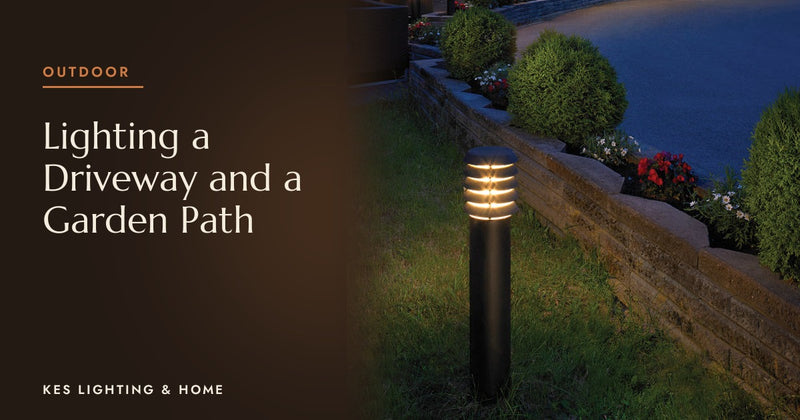
Astro's answer is ceramic and concrete. The Astro Mast Light Coastal in gloss glaze white (£92.56, checked 19 October 2026), the light in the photograph at the top of this guide, is a 137mm glazed ceramic dome that throws one GU10 downwards; its datasheet gives it a coastal location, for use within five miles of the coast. Astro's concrete coastal fittings are cast with weatherproof additives and, per its care guide, want a light brush and a fresh-water rinse rather than detergent.


What does 'coastal' mean on an Astro or Elstead listing?
A maker's description of where a fitting may go, backed by that maker's own warranty terms. It is not one universal standard, and the details sit on the datasheet and the guarantee, not in the product title. The two makers behind most of the 'Coastal' titled lights we stock define it differently.
| Astro | Elstead | |
|---|---|---|
| Where the word comes from | A Coastal collection on Astro's website, and 'Location: Coastal' on the datasheet. Astro's FAQ says its stainless coastal products are marine grade 316 | A Coastal Collection on Elstead's site, spanning Elstead, Norlys, Kichler, Hinkley, Quoizel and Feiss |
| Distance from the sea | 2024 coastal sheets: 'within five miles (eight km) of the coast or in other onerous environments'; older ones say 'suitable for use by the coast'. Some non-coastal sheets say the fitting is not suitable within five miles of the coast | No single distance for the collection. Anti-corrosion guarantees on painted cast aluminium or steel exclude locations within five miles of the coastline |
| What the guarantee says | Astro's coastal warranty page: ten years on the Coastal collection, except integral LEDs or drivers (three years); an external driver is outside the ten years. It covers manufacturing defects. Some 2024 datasheets say three years | Varies by product: the Coastal Collection 20 year guarantee covers 'right by the coastline without exclusion'; others carry their own terms, such as eight years on galvanised Stockholm |
| Care it asks for | Wash at least four times a year in coastal locations (care guide) | No published care routine that we could find; follow the leaflet in the box |
Sources: Astro's coastal warranty page, FAQ and datasheets for the Ava 200 Coastal, Montreal Oval Coastal and Jura Twin; Astro's care and cleaning guide; Elstead's warranties and guarantees page and Coastal Collection, all read on 19 October 2026.
Three things follow. First, 'coastal' is a filter, and the grade still matters: Elstead's Coastal Collection includes a Copenhagen lantern in 304 stainless, which Elstead describes as suitable for coastal regions, so the label alone does not tell you the steel is 316. Second, documents can disagree: Astro's website offers ten years on its Coastal collection while some model datasheets say three, and Astro notes that when you buy through a retailer, the warranty is held by that retailer and may differ. If two documents disagree, ask us to confirm the terms that apply rather than relying on the most generous number. Third, a warranty covers defects for a period; it is not a prediction of how long a fitting will last. 'Coastal' in a product title is where the reading starts, not where it ends.
Does it matter which wall the light goes on?
Yes, and in a way that catches people out. The sea-facing wall is the obvious danger, but the sheltered porch is the one that gets neglected. IMOA's guidance is to choose designs that rain can wash clean, because rain removes the salt; a light tucked under a canopy stays out of the driving spray, but it also stays out of the rain that would rinse it, so salt builds up where nobody looks. Our rule of thumb by position:
- Open, sea-facing walls, gables and balconies: 316 stainless, ceramic or polymer, approved for the coast by the maker. This is the wall where we would not fit painted metal or 304.
- Porches, canopies and recessed doorways: solid brass or copper lanterns are at home here, but wash them on the same schedule as the exposed lights, because the rain will not do it for you.
- Side returns and walls facing inland: usually the most forgiving spot on the house, though windborne salt still reaches them. A good powder-coated fitting has its best chance here.
- Low down in the garden: Astro's care guide warns that fittings at or near ground level must be kept clear of lawn, driveway and decking chemicals, which can damage the finish.
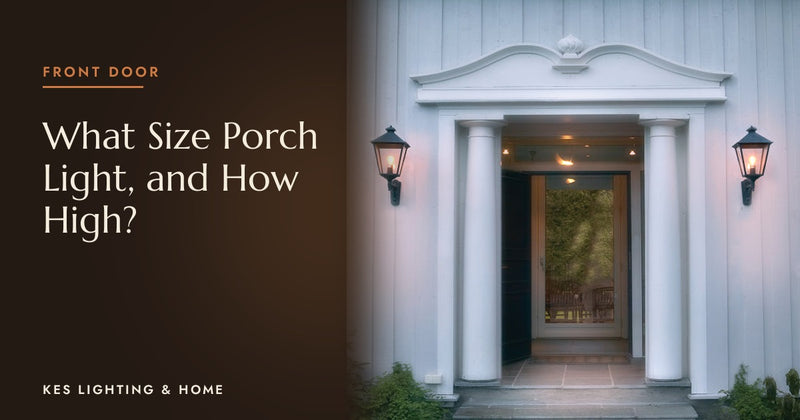
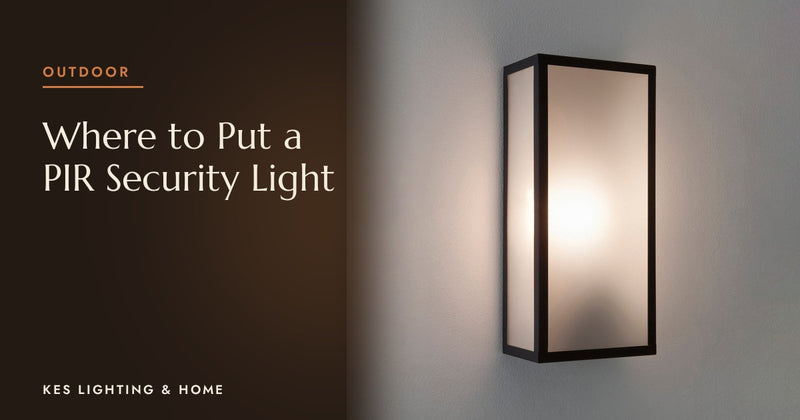
For border lighting, the Astro Skye Coastal spike spot in brushed stainless steel (£106.95, checked 19 October 2026) is a 316 stainless spike light, IP65, with an integral 600 lumen 3000K LED, according to Astro's datasheet. It is a Class III fitting that runs from a separate 700mA constant-current driver rather than straight off the mains. The driver's specification, position and protection are part of the design, not details to settle after buying the light, and Astro's coastal warranty does not extend its ten years to an external driver. That is a conversation for your electrician, and our guide to lighting a driveway and garden path covers when outdoor wiring needs one. For the front door itself, size and height are in our front door lighting guide. And if you are adding a motion sensor by the sea, note that Elstead guarantees PIR sensors and LED modules for two years whatever the body's corrosion cover; our PIR security light guide covers where to put one.
How do you look after outdoor lights by the sea?
Wash the salt off on a schedule, gently, with fresh water, and follow the instructions for the exact material. Astro publishes a routine in its care and cleaning guide: exterior fittings cleaned every six months as standard, and at least four times a year in coastal locations or near industrial pollution. We found no equivalent routine online from Elstead, so for Elstead fittings follow the leaflet in the box.
- Switch the power off at the supply and let any lamp cool before you touch it.
- Wash with warm water and a mild detergent to lift salt and grime from metal, unless the material calls for something else: Astro says concrete wants brushing and a rinse.
- Rinse with fresh water, then dry with a soft cloth so water spots do not form.
- Never use a pressure washer. Astro's guide says so in capitals.
- No abrasive cleaners containing ammonia, isopropyl alcohol or other solvents, which Astro warns can damage applied finishes. Elstead's guarantees may exclude fittings cleaned with an aggressive cleaner.
- Look at the seals and glazing while you are there. A perished gasket, a cracked diffuser or a gap at the glass lets rain in. This step is our advice.
Adjust for the finish. Bare brass, per Astro, benefits from a fresh-water rinse every few months to keep the ageing even. PVD and lacquered finishes want a soft cloth and nothing abrasive; never metal polish on a coated finish, because once the coating is gone it does not come back. Anything beyond cleaning, from a damaged seal to water inside the fitting, is a job for the supplier or an electrician.
Is this outdoor light right for where you are fitting it?
Run any outdoor listing against these six before you buy for a coastal or exposed house.
- Exposure: open and sea-facing, sheltered under a canopy, inland-facing or low in the garden. Ingress protection is a separate check: IP44 does not mean a light cannot be coastal, and IP65 does not mean its metal resists salt, as our outdoor IP guide explains.
- The maker's coastal terms: does the datasheet say coastal, and does it give a distance? Does the guarantee exclude sites within five miles of the coast?
- Material and grade: 316 or just 'stainless'; solid brass or a brass-coloured finish; lacquered or bare; galvanised or painted.
- The warranty for that exact model: how many years, what it covers (manufacturing defects, finish, seals, LEDs, a separate driver) and who holds it if you buy through a retailer.
- Mounting surface: timber cladding, render or stone. Astro's sheets state whether a fitting is suitable for mounting on flammable materials, which matters on timber.
- Voltage: mains 230V, or extra-low voltage from a separate driver that needs a dry, protected home. The listing should tell you which.
If a listing cannot answer the first three, ask us before you order, or choose one that can. Everything else for the outside of the house is in outdoor wall lights, and our broader guide to the best outdoor wall lights for a UK garden covers style and size.
The short version
- Buy a fitting its maker approves for coastal use. Five miles is the supplier term you will see most, not a line where salt stops.
- 316 stainless, not 304. Its molybdenum resists salt pitting better, though it can still stain; 'stainless' on its own tells you nothing.
- Solid brass and copper do not rust because they contain no iron. They tarnish and can go green, so choose them for patina, under shelter.
- On the most exposed wall, our preference is a ceramic or polymer body over painted metal.
- 'Coastal' in a title is a filter. Read the maker's distance, the grade and the warranty for that exact model; a warranty is not a lifespan.
- Wash with fresh water at least four times a year by the sea, following the maker's method for the material. Never a pressure washer.
Frequently asked questions
What are the best outdoor lights for coastal areas?
Fittings their maker approves for the coast, in materials that tolerate salt: 316 stainless steel, solid brass or copper, galvanised steel, ceramic or polymer. On an open sea-facing wall we would choose 316 stainless, ceramic or polymer; under a porch, a solid brass lantern suits if you are happy for it to age. Whatever you choose, wash it at least four times a year.
What material is best for outdoor lights in coastal areas?
For a wall that takes the sea wind, our choice is 316 stainless steel or a non-metal body such as ceramic or polymer. 316 contains around 2% molybdenum, which improves resistance to the pitting that deposited salt causes. Solid brass and copper do not rust but change colour. Painted aluminium or steel is what we would avoid near the sea, and Elstead excludes such finishes within five miles of the coast from its anti-corrosion guarantees.
What are some coastal rated outdoor lights?
Astro's datasheets mark its coastal fittings 'Location: Coastal', including the Ava 200 in 316 stainless, the Montreal Oval in PVD brass over 316 and the ceramic Mast Light. Elstead's Coastal Collection includes the polymer Kerry range, Norlys Stockholm in galvanised steel and solid brass lanterns such as the Mansion House. Check the maker's terms for each exact model.
Is 316 stainless steel rust proof?
No. It resists the chloride pitting that salt causes better than 304, but it can still stain or corrode, particularly if it is splashed with seawater and never cleaned. Choose a smooth finish, check the maker's coastal approval for the exact fitting, and wash it on the maker's schedule.
Will solid brass outdoor lights rust by the sea?
No. Rust is the corrosion of iron and steel, and brass is copper and zinc. Brass can still corrode: it tarnishes dark first and can turn green or blue-green where it stays wet, and a lacquered finish can go patchy once the lacquer breaks down. Seals and fixings matter too. We would fit it somewhere sheltered and rinse it every few months.
Is 304 stainless steel OK near the sea?
Not on an exposed wall, in our view. 304 has no molybdenum, and the International Molybdenum Association says it is not appropriate for coastal use unless the finish is very smooth, it is cleaned regularly and some staining is acceptable. Brown 'tea staining' is what that looks like. We would choose 316 for anything in sight of the sea.
How often should you clean outdoor lights near the sea?
At least four times a year, which is Astro's advice for coastal and other harsh locations, against every six months elsewhere. Switch off, wash as the maker allows for that material, rinse with fresh water and dry with a soft cloth. Never use a pressure washer, solvents or abrasive cleaners. Sheltered fittings need it as much as exposed ones, because rain does not rinse them.