Light a garden path with low, shielded bollards that put their light on the ground, starting at the steps, bends and gate, and, as our own starting point, about 3 metres apart on straight runs. Light a driveway at the entrance, the bends and where you park, not across the middle. Keep it warm white, 2700K to 3000K, and aim nothing at a neighbour's window. We would have a registered electrician wire anything on the mains.
The clocks go back on Sunday 25 October 2026 (gov.uk), which is when the walk from the car to the front door starts happening in the dark. Walk the route at dusk first and note where the ground disappears or a bright source makes it harder to see. The rest of this guide is which fitting does which job, how far apart and how bright, how to stay on the right side of the neighbours, and exactly what the rules say about who can fit it. The full ranges are in our driveway lights and bollard lights collections.
What is the best type of light for a driveway or a garden path?
Shielded bollards for paths, a pair of pedestals or a post at the drive entrance, and a wall light where the drive meets the house. Spike lights belong in the planting, not on the route. Each type has one job it does better than the others, and in our view most disappointing schemes come from asking one fitting to do two.
| Fitting | Typical height | The job it does best | Check before choosing |
|---|---|---|---|
| Shielded bollard | Most of ours 300mm to 850mm | Marking a path or a drive edge with light on the ground | The beam on the ground, and the glare from both directions |
| Lamp post | About 1.8m to 2.5m | An entrance or a turning area | Foundations, light spill, and scale beside the house |
| Pedestal (pillar) lantern | Most of ours 300mm to 700mm | Marking an entrance from a gate pier or low wall | Base dimensions, fixing space, and how much of the bulb you can see |
| Wall light | Fixed on the house or garage | Parking beside the house and the last few metres to the door | Mounting height and where the light actually lands |
| Spike light | Low, in the bed | Lighting a tree, a hedge or a wall beside the route | Aimed away from walkers, drivers and windows |
Our view: on a path, the light belongs on the ground, not in the fitting you are looking at. That is why we would choose a bollard with a shielded or angled head over one with a bare lamp on top, and avoid up-and-down wall lights by a drive. The Institution of Lighting Professionals says of up-and-down projectors, in its domestic lighting guidance, that they produce a considerable amount of uncontrolled upward light. Our older garden bollard lighting tips covers bollard styles and materials.
How do you light a garden path?
With knee-height bollards along one side, their light directed down onto the paving. In our view one side is enough for a path under about a metre and a half wide; lighting both sides of a narrow path doubles the cost and makes it look like an airport taxiway. On a winding path, put them on the outside of each bend, where your feet will actually go. On a wider route or uneven ground, check whether one side leaves the far edge in shadow.
The Astro Soprano outdoor bollard in textured black (£178.71, checked 19 October 2026) is the one we would fit on a modern path: 490mm tall with an angled head that directs light towards the ground, and one GX53 lamp up to 9W. It is IP44, so check the maker's installation conditions for your position, and look at it from both ends of the path before it is fixed, because an angled head faces one way. Its only Junip review so far calls it 'Worth the extra cost.' For a lower marker beside steps or planting, the Schuller Matia outdoor bollard in dark grey and opal (£70.95, checked 19 October 2026) is 300mm tall, IP65, with a flat opal panel giving a stated 460 lumens at 3000K. Its integrated LED is not dimmable, so settle the position before it is installed.


One thing we would overrule: lights recessed into the path itself, pointing up. They put the brightest thing on the route directly beneath the eyes of the people walking it. Keep ground lights for washing a wall or a tree beside the route. And steps need usable light across every tread and edge, whatever spacing the rest of the path has.
How far apart should driveway and path lights be?
We would start at a light for each flight of steps, bend, junction and gate, then fill straight runs at no more than about six times the fitting's height. That is our rule of thumb, not a standard, and it puts 490mm bollards around 3 metres apart and 850mm drive bollards around 5 metres apart. Then test it, because two fittings of the same height can spread light very differently.
The reasoning. The ILP's Guidance Note 9/19 says a spacing of around 2.5 times the mounting height should give the right performance for general area lighting, and that low bollards may be required at a fairly close spacing. That is the rule for lighting the ground evenly. A path needs every edge, step and turn to be visible rather than even light everywhere, so on a straight, level run we accept a short dark gap between pools instead of a bollard every metre and a quarter. Where the ground changes, close the gaps.
| Fitting | Height | Straight run (our starting point) | Always add light at |
|---|---|---|---|
| Low path bollard | 300mm | About 1.8 metres | Steps: enough to light every tread and edge |
| Path bollard | 490mm | About 3 metres | Bends, junctions, the gate and the door end |
| Drive bollard | 850mm | About 5 metres, one side | The entrance, each bend, where you park |
| Lamp post | About 2 metres | About 5 metres if you want the area lit evenly (ILP's 2.5 times height) | The gate, or the turning space by the house |
| Pedestal on a pier | On the pier | In pairs at the entrance | Each gate pier |
The test: ask the maker or us for photometric information where it exists, or have your electrician safely connect the first two fittings before the remaining positions are fixed, and look at them at dusk. If the ground between them disappears, close the gap. Ten minutes standing on the path tells you more than any table.
How many lumens should path and driveway lights be?
We would start at about 300 to 500 lumens for a low path light and about 400 to 500 lumens for a clear-glass lantern on a post or pier, at 2700K to 3000K. These are our comparison ranges, set against what the fittings in this guide state (Schuller Matia 460 lumens, Astro Bayville spike 467, Les Jardins Tulip solar 300), and the dusk test above is what confirms them. A fitting that directs its light onto the paving does more useful work than a brighter one shining sideways into your eyes.
For scale, the ILP's guidance suggests a porch light of 600 to 900 lumens can light a porch all night, and that it is rarely necessary to use a security floodlight brighter than 2000 lumens; more only causes more glare and darker shadows. A path light sits much closer to the ground it lights than either, which is why we start lower.
- Clear lantern on a post or pier: try a modest lamp first, such as the E27 candle LED filament bulb at 2700K (£7.46, checked 19 October 2026), rated at 470 lumens, rather than a 1,000 lumen lamp that turns the glass into a glare source. Check the cap, size and suitability for the lantern; our guide to which bulb a light needs covers caps and shapes.
- Maximum wattage: the figure on a fitting is a safety limit, not a target. Start modest and go up only if the dusk test says so.
- Colour: our preference is 2700K for lanterns and anything near the house, and 3000K at most for bollards and spikes. Cooler than that, and to our eye a front garden starts to look like a petrol station forecourt. Keep neighbouring fittings the same, so the scheme reads as one.
What are the best post and pillar lights for a driveway entrance?
A matched pair of pedestal lanterns on the gate piers, or a single lamp post beside the gate if there are no piers. Measure the pier cap before you choose: the base and its fixings need to fit the usable surface, and the lantern's overall width is a different measurement from its bolt pattern, so check the fixing drawing. One customer who bought a pair of Norlys Turin Grande pedestals told us size and price were what mattered most. For us size comes first. It starts with a tape measure on the pier.
The Norlys Turin Grande outdoor pedestal in black (£245.95, checked 19 October 2026) is 640mm tall with a listed 300mm diameter, die-cast aluminium with polycarbonate panels, a 15 year warranty against structural failure, and one E27 lamp. It is IP54: the same water digit as IP44, with more protection against dust. It suits a substantial stone or brick pier. For a smaller pier, or a smaller budget, the Elstead Glenbeigh pedestal lantern (£57.75, checked 19 October 2026) is 390mm tall with a 270mm opal globe and a polymer body, IP44, listed with Elstead's Coastal Collection 20 year guarantee. Opal softens the view of the lamp, so a pier light glows rather than glares, provided the lamp is modest.


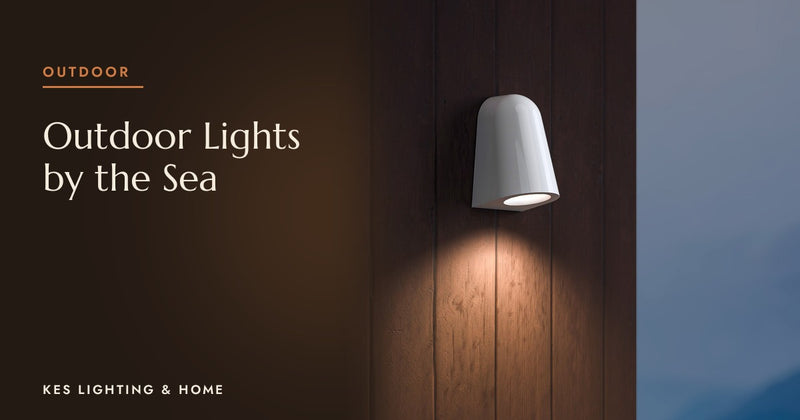
Where there are no piers, a post. The Elstead Kinsale lamp post in black (£178.95, checked 19 October 2026) is 1930mm of polymer with polycarbonate panels, IP44 and Class II, listed with the same Coastal Collection 20 year guarantee, which puts it on our shortlist for an exposed front; confirm the guarantee terms for your model before you rely on them. For a period house, the Feiss English Bridle large lamp post in black (£290.52, checked 19 October 2026) is 2426mm of black steel with a seeded glass head, three E14 lamps and IP44; at 8.73kg it needs a proper footing. Agree the foundation, fixings and cable route with the installer for either. On the coast, read which outdoor lights suit a coastal home before choosing any metal.


What is the best way to light a long driveway?
Light the places that need it, not the whole length. A car brings its own headlights; what a long drive needs is the entrance marked from the road, each bend marked so nobody clips the verge, and proper light where you park and walk to the door. Where a straight stretch is used only by cars, we would leave it dark. If people walk the full length, from a bus stop or with a pushchair, light it for them, because headlights do nothing for the pedestrian route.
For the bends and the edge by the parking area, a tall bollard on one side. The Norlys Alta large outdoor bollard in black (£451.92, checked 19 October 2026) is 850mm tall and 150mm across, IP65, with layered louvres around the lamp and a 15 year warranty against structural failure. At 850mm it is easier to pick out from a driver's seat than a 490mm path bollard; check its glare from the driving position as well as on foot.

Two practical warnings for long drives. First, the cable run. Plan every fitting before anyone digs, and agree the route, protection, controls and future access with the electrician; MyJobQuote lists £150 to £220 for mini-digger hire alone. Second, ground lights set into the drive surface. We would not put any ground light where a tyre will run unless the maker states a drive-over load in writing; 'walkover' does not mean drive-over. Keep the walkover ground lights for paths and patios.
Where trenching is out of the question, solar is the compromise worth looking at. The Les Jardins Tulip adjustable solar bollard in space grey (£335.78, checked 19 October 2026) gives up to 300 lumens at 3000K, adjusts from 82cm to 137cm, is IP66, and also charges by USB-C. Les Jardins quotes a full recharge in 8 hours of sun and up to 17 hours of running on the lowest setting, so check the winter running time on the mode you will use. We would still keep wired lights for the places that must work every night, the parking area and the door. There are more in solar post lights.
Where do wall lights and spike lights fit on a drive?
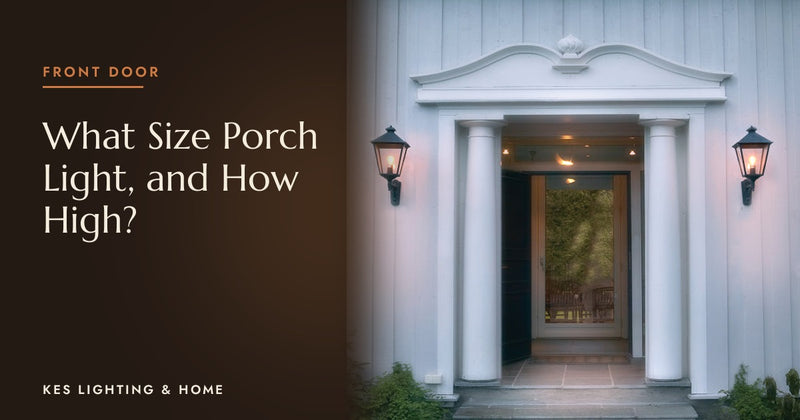
Wall lights do the last few metres: the garage door, the side of the house where you get out of the car, the front door. Choose one that sends most of its light down. A lantern that hangs from its bracket is not automatically shielded, because clear sides still throw light outwards, so judge where the light lands, not which way the body points. The Norlys Turin Grande outdoor down wall lantern (£216.95, checked 19 October 2026) hangs below its bracket, 560mm tall, IP54, and it matches the Turin Grande pedestals, which is the tidiest way to make a drive and a house look like one scheme. With clear panels, give it a modest lamp. For mounting height and lantern size against a door, see our front door lights guide; for wall lights more generally, the best outdoor wall lights for a UK garden.
Spike lights are for the planting beside the drive: a tree, a hedge, a wall. Lit planting gives a drive depth and makes the edges legible without another post. The Astro Bayville LED spike spot in textured black (£97.95, checked 19 October 2026) is IP65, 467 lumens at 3000K from an integral LED, with a head that tilts through 90 degrees and swivels through 330. Put it between the drive and the tree, aimed at the tree and away from walkers, drivers and neighbouring windows. Never aim a spike along a path: you have just built a headlight at ankle height. There are more in ground and spike lights.

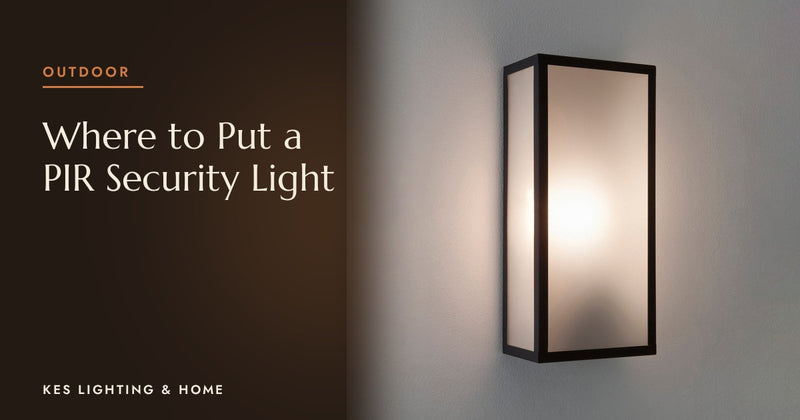
Sensor floodlights are a separate job with their own mistakes; our PIR security light guide covers detection and timing separately from where the light goes.
Can neighbours complain about outside lights?
Yes. In England and Wales, section 79(1)(fb) of the Environmental Protection Act 1990 makes 'artificial light emitted from premises so as to be prejudicial to health or a nuisance' a statutory nuisance, and a council that finds one must serve an abatement notice requiring whoever is responsible to stop or restrict the light (gov.uk guidance for England). Scotland has its own version of the same provision.
There are no set light levels. The gov.uk guidance says councils consider whether the light unreasonably and substantially interferes with the use or enjoyment of a home, or harms health; how it affects the average person; and how often, how long and at what time it happens, in town or country. Security lights are on its list of common causes. Low, shielded light aimed down is the easiest way to stay well clear of it:
- Aim down and keep beams within the area you need to light. The ILP's guidance says light between 85 and 100 degrees from straight down is the main cause of sky glow.
- Keep sources below eye level on a shared boundary. Bollards, not posts, along a fence line.
- Warm white, and the lowest output that passes the dusk test.
- Put drive lighting on a timer, or a photocell with a cut-off, where light at 3am serves nobody.
- Check from the road and from the neighbour's side after dark before you call the job finished.
Do outdoor lights need to be installed by an electrician in the UK?
Our advice: for anything wired to the mains, use a registered electrician. That is our recommendation; the legal position depends on where you live and what is being changed. In England, building regulations make the work notifiable when it involves a new circuit, a new consumer unit, or work in a special location, and outdoors is not a special location in England. In Wales it is, so adding outdoor lights is notifiable there. Either way, the work should be designed, installed, inspected and tested to the wiring standard, BS 7671, including RCD protection and properly protected buried cable.
What the rules say in England
Part P of the Building Regulations covers fixed lighting outside a house and in its garden, as Approved Document P spells out (paragraph 2.2, 'fixed lighting and pond pumps in gardens'). Notifiable work is set out in regulation 12(6A): a new circuit, a replacement consumer unit, or an addition or alteration to existing circuits in a special location, which in England means the space around a bath or shower, or a room with a swimming pool or sauna heater (paragraph 2.5). Additions and alterations outside special locations, and replacements, repairs and maintenance anywhere, are not notifiable (paragraph 2.7). The 2013 edition is still the current one on gov.uk.
Not notifiable is not the same as unregulated. Paragraph 3.13 says non-notifiable work should still be designed, installed, inspected, tested and certificated to BS 7671, and paragraph 3.14 says councils can take enforcement action if it is unsafe. Notifiable work has to be self-certified by a registered competent person, certified by a registered third-party certifier, or notified to building control before work starts. BS 7671 is the technical standard; the building regulations decide what must be notified.
Wales, Scotland and Northern Ireland
In Wales, outdoors counts as a special location, along with kitchens, so adding a lighting point outdoors is notifiable (gov.wales, Planning Portal). In Scotland, electrical work falls under the building standards, and Standard 4.5 expects installations to be designed, installed and tested to BS 7671 by people with the right knowledge and experience (gov.scot). In Northern Ireland, check with your installer or the council's building control before work starts.
What BS 7671 asks for outdoors
The current edition is BS 7671:2018+A4:2026; the previous amendment stopped being valid on 15 October 2026 (IET). Three requirements matter most for drive and path lighting:
- 30mA RCD protection. Since the 18th Edition, Regulation 411.3.4 has required additional protection by a 30mA RCD for circuits supplying lights in homes (IET, Professional Electrician). Electrical Safety First's garden advice is to use an RCD with all outdoor electrical equipment.
- Buried cable that can survive a spade. Under Regulation 522.8.10, cable buried in the ground must have an earthed armour or metallic sheath, or run in a conduit or duct giving equivalent protection, and its route must be marked with cable covers or marker tape; buried cables, conduits and ducts must be deep enough to avoid damage from any reasonably foreseeable disturbance of the ground (IET Wiring Matters). There is no single depth we can responsibly give for every garden or drive, which is exactly why the electrician decides it.
- Testing and a certificate. Agree which certificate the job needs before it starts. A test certificate is how you know the RCD trips and the earth is sound. If you cannot test it, you cannot sign it off.
What you can do yourself, and what you should not
| Job | England | Wales | Who we would use |
|---|---|---|---|
| Plan positions, buy fittings, measure the piers | Not electrical work | Not electrical work | You |
| Dig the trench and set post footings | Not electrical work | Not electrical work | You, once the electrician has agreed the route, depth and inspection, and existing services have been checked |
| Solar lights | No wiring | No wiring | You |
| Replace an existing outdoor light, like for like | Not notifiable, but still to BS 7671 | Generally not notifiable; check with building control | A registered electrician, unless you can isolate, connect and test it properly |
| Add a light to an existing circuit outdoors | Not notifiable, but should be tested and certified to BS 7671 | Notifiable | A registered electrician |
| New circuit for drive or garden lighting | Notifiable | Notifiable | A registered electrician |
Our position is stricter than the minimum: we would not wire, bury or connect mains cable in a garden ourselves, and we sell the fittings. Every bollard and post in this guide is a hard-wired mains fitting. A registered electrician can self-certify notifiable work within their scheme and give you the Building Regulations compliance certificate; you can check someone's registration on the Electrical Competent Person register. What you can usefully do is the planning and, once it is agreed, the digging, which on a long drive is hard work in its own right.
As for cost, MyJobQuote's outdoor lighting guide (updated 17 September 2026) puts electricians at £200 to £400 a day outside London, with most charging half a day as a minimum for outdoor lights, and new external wiring adding £60 to £180. A drive with a trench and a new circuit will cost more. Get an itemised written quote covering groundwork, cable, RCD protection, fittings and the certificate.
What are the most common driveway and path lighting mistakes?
- Lighting the middle instead of the edges. The edge is what you need to see.
- Choosing quantities before seeing the beam. Do the dusk test on the actual path.
- Glare at eye level. Bare lamps in clear lanterns along a path, where everyone walks straight towards them.
- Spikes aimed along the route. Point them at the planting.
- Leaving steps or a walking route dark because the drive is mainly for cars.
- Measuring the pier after the pedestals arrive. Check the fixing drawing first.
- Reading too much into an IP rating. It says nothing about load capacity or corrosion resistance, and IP65 alone is not permission to pressure-wash a fitting; do that only if the maker expressly allows it. Our IP rating guide for outdoor lighting explains the codes.
- A flex across the lawn. Buried cable has rules for a reason. If a fork can find it, so can water.
If you would like a second opinion before anyone digs, send us a sketch of the drive or path with its measurements, and we will tell you what we would fit and how many. Forty-one years in, we would rather sell you the right number of lights than the most.
The short version
- Paths: shielded, knee-height bollards lighting the ground. Start at steps, bends and the gate, then about 3 metres apart on straight runs (our rule of thumb), and check at dusk.
- Drives: mark the entrance, the bends and where you park. Leave a car-only straight dark; light any route people walk.
- Brightness: we start at about 300 to 500 lumens for a path light and a modest lamp of around 470 lumens in a clear lantern. 2700K to 3000K.
- Aim everything down and below the neighbours' windows. Light can be a statutory nuisance under the Environmental Protection Act 1990.
- We recommend a registered electrician for mains outdoor lighting: 30mA RCD protection, armoured or ducted buried cable, a test certificate. In Wales, adding outdoor lights is notifiable.
- You can plan, measure and, once the route is agreed, dig. Solar needs no wiring; check its winter running time.
Frequently asked questions
How far apart should driveway lights be?
Our rule of thumb: light the entrance, each bend and where you park, then start at no more than about six times the fitting's height apart on straight runs, so roughly 5 metres for 850mm bollards on one side. Check at dusk, because beams differ. For evenly lit ground, the ILP suggests around 2.5 times the mounting height.
How many lumens should pathway lights be?
We start at about 300 to 500 lumens per low path light, at 2700K to 3000K; the lights in this guide state 300 to 467 lumens. Treat that as a comparison range and confirm with a dusk test. Light aimed onto the paving does more than a brighter source shining sideways.
Can I use IP44 bollards outside?
Yes, many are designed for it, including the Astro Soprano. Check the maker's permitted position and installation requirements for your site. IP65 adds dust-tightness and protection against water jets, but it is not a legal minimum and it is not permission to pressure-wash.
Can I install outside lights myself?
In England, adding a light to an existing circuit outdoors is not notifiable, but it should still be installed, tested and certified to BS 7671, with 30mA RCD protection. A new circuit is notifiable, and in Wales any addition outdoors is. We recommend a registered electrician for all mains work; you can plan and, once the route is agreed, dig.
How much does an electrician charge to fit an outside light?
MyJobQuote's guide, updated 17 September 2026, puts UK electricians at £200 to £400 a day outside London, with half a day the usual minimum for outdoor lights and new external wiring adding £60 to £180. Trenching and a new circuit for a driveway scheme cost more.
What is considered nuisance lighting?
Light from premises that unreasonably and substantially interferes with the use or enjoyment of a home, or harms health, judged by its effect on an average person and by when, how often and how long it happens. It is a statutory nuisance under section 79 of the Environmental Protection Act 1990, and councils can serve an abatement notice.